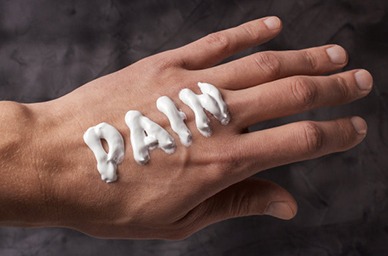
You apply a pain cream to your sore knee. You rub it in. You feel a cooling or warming sensation. Relief comes — but it fades within an hour.
Why do some pain relief creams work for hours, while others feel like expensive lotion?
The answer isn’t always the active ingredient. Often, it’s the delivery system. Because your skin is not a sponge. It’s a fortress.
As a pain cream OEM manufacturer with over a decade of formulation experience, Kangzhimei doesn’t just select active ingredients — we engineer transdermal delivery systems that actually get those ingredients past the skin barrier and into the tissue that needs them.
In this guide, we’ll decode the science of skin penetration: why most pain cream fails, how transdermal delivery actually works, and what to look for when choosing a topical pain relief product.
Part 1: Your Skin Is Designed to Keep Things Out
This is the fundamental challenge every pain cream faces: the very organ you‘re applying it to evolved specifically to prevent outside substances from getting in.
The stratum corneum — the outermost layer of your skin — is essentially a brick wall. Dead skin cells (the bricks) are embedded in a lipid matrix (the mortar). This barrier is remarkably effective. It has to be — it‘s protecting everything inside your body from the environment outside.
For any active ingredient to reach deeper tissues from a pain cream, it must navigate this barrier through one of three primary routes:
| Route | How It Works | Best For |
|---|---|---|
| Intercellular route | Molecule weaves between skin cells through lipid-rich spaces | Lipophilic (fat-soluble) molecules — this is the dominant pathway |
| Transcellular route | Molecule passes directly through skin cells | Requires alternating between fat-soluble and water-soluble environments — much harder |
| Appendageal route | Molecule enters through hair follicles or sweat glands | Covers only ~0.1% of skin surface area — shortcuts past the barrier but limited capacity |
The ideal transdermal candidate is small (generally under 500 Daltons molecular weight), has balanced fat/water solubility, and remains stable in a cream formulation.
Long-tail keyword: how does pain cream absorb through skin
Why this matters for consumers: A pain cream with “10% menthol” sounds powerful. But if the menthol isn‘t delivered past the stratum corneum, most of it never reaches the nerve endings. You feel the surface cooling effect — but the deep pain remains.
Part 2: What Transdermal Delivery Looks Like in Real Medicine
Transdermal drug delivery is not experimental — it’s established medicine.
| Delivery System | How It Works | Proof of Concept |
|---|---|---|
| Nicotine patches | Sustained nicotine delivery through skin into bloodstream | Mainstream since 1990s — maintain therapeutic levels for hours |
| Fentanyl patches | Potent opioid delivered transdermally for severe pain | Stable blood levels for up to 72 hours — proves large molecules can work transdermally with right technology |
| Lidocaine patches (Rx 5%) | Prescribed for nerve pain, especially post-herpetic neuralgia | Local anesthesia by blocking sodium channels in nerve fibers beneath application site |
| Estrogen patches | Hormone replacement therapy | Avoids liver first-pass metabolism that oral formulations face |
Each of these products represents significant pharmaceutical R&D investment. They use specialized adhesives, rate-controlling membranes, and carefully engineered formulations. Consumer-grade pain creams — even well-designed ones — typically don‘t incorporate this level of delivery technology. That gap is worth keeping in mind when you buy.
Long-tail keyword: transdermal pain cream delivery technology
Part 3: Why “Active Ingredient Percentage” Is Only Half the Story
Two pain creams can contain the same 4% menthol. One provides 4 hours of relief. The other provides 45 minutes.
Why the difference? Formulation technology.
What separates effective transdermal pain cream from ineffective ones:
| Factor | Poor Formulation | Effective Formulation (Kangzhimei Standard) |
|---|---|---|
| Particle size | Large crystals — sit on surface | Micronized (<10 microns) — penetrate deeper |
| Solubility balance | Too water-soluble — can‘t cross lipid barrier | Balanced lipophilicity — crosses stratum corneum |
| Penetration enhancers | None or synthetic (propylene glycol) | Natural enhancers (eucalyptus oil, lecithin, aloe) |
| Base type | Petroleum jelly — occlusive but poor carrier | Emulsion with phospholipids — mimics skin’s lipid structure |
| Stability | Separates over time — inconsistent dosing | 24-month stability — consistent batch to batch |
Long-tail keyword: best pain cream formulation for deep tissue absorption
Kangzhimei‘s approach: We use a proprietary emulsion base with natural penetration enhancers that temporarily disrupt the stratum corneum’s lipid bilayer — just enough to allow active ingredients through, but not enough to damage the skin barrier.
Part 4: Ingredient-Specific Transdermal Profiles — What Actually Penetrates?
Not all pain cream ingredients are created equal when it comes to skin penetration.
Menthol:
- Molecular weight: ~156 Daltons (well below 500 Dalton cutoff)
- Lipophilicity: Good — crosses stratum corneum readily
- Evidence: FDA-approved topical analgesic. Fast onset, 1–3 hour duration.
- Verdict: ✅ Excellent transdermal profile. Works reliably.
Lidocaine:
- Molecular weight: ~234 Daltons
- Lipophilicity: Moderate — requires formulation assist
- Evidence: Gold standard topical anesthetic. 5–15 min onset, 3–4 hour duration.
- Verdict: ✅ Very good — but needs proper base for optimal penetration.
Capsaicin:
- Molecular weight: ~305 Daltons
- Lipophilicity: High — crosses lipid barrier well
- Evidence: FDA-approved for arthritis and neuropathy. Depletes Substance P over time.
- Verdict: ✅ Excellent transdermal profile. Note: high concentrations (8% patches) are prescription-only and must be applied in clinic setting.
CBD:
- Molecular weight: ~314 Daltons
- Lipophilicity: Very high (logP ~6) — excellent for skin penetration
- Evidence: Emerging. CBD topical market valued at $1.3B in 2024, projected to reach $5B by 2035 (13.1% CAGR).
- Verdict: ✅ Strong transdermal potential. Regulatory landscape still evolving.
Long-tail keyword: cbd pain cream vs menthol which penetrates better
MSM (Methylsulfonylmethane):
- Molecular weight: ~94 Daltons (very small)
- Lipophilicity: Low (water-soluble) — penetration challenge
- Evidence: Moderate for topical. Works best when combined with penetration enhancers.
- Verdict: ⚠️ Needs formulation support — not effective as a standalone topical.
Arnica / Boswellia:
- Molecular weight: 300–500+ Daltons (variable)
- Lipophilicity: Mixed — some compounds penetrate, others don‘t
- Evidence: Traditional use supported by some clinical evidence.
- Verdict: ⚠️ Variable. Best formulated with liposomal or nano-emulsion technology.
Part 5: New Frontiers in Topical Pain Delivery
The pain cream market is evolving beyond traditional formulations. Emerging technologies are addressing the fundamental challenge of skin penetration.
Hydrogel-based formulations — highly hydrated, biocompatible polymer networks — are increasingly investigated as drug-delivery systems for analgesics. Their ability to modulate local release, prolong drug residence time, and reduce systemic toxicity positions them as promising platforms.
Key findings from a 2025 scoping review of 26 clinical studies on hydrogel analgesic delivery:
| Finding | Detail |
|---|---|
| Most common drug class | Local anesthetics (46.2% — lidocaine, ropivacaine, bupivacaine) |
| Most common application | Topical/transdermal (38.5%) and perioperative/incisional (30.8%) |
| Reported outcomes | Most studies reported improved analgesic outcomes — reduced pain scores and lower rescue medication use |
| Safety | Generally favorable; tolerability was good |
Microneedles offer a minimally invasive means to deliver analgesics directly to subdermal nerve layers, enabling both rapid and prolonged therapeutic effects with fewer systemic side effects. Stimuli-responsive systems (activated by heat, light, or mechanical pressure) allow for spatiotemporally controlled analgesia.
These innovative strategies reflect a shift toward more personalized, efficient, and less invasive approaches to pain management.
Long-tail keyword: hydrogel pain cream for deep tissue relief
Part 6: How to Choose a Pain Cream That Actually Works — A Consumer Checklist
| Question | What to Look For | Red Flag |
|---|---|---|
| Are ingredient percentages disclosed? | Yes — e.g., “Menthol 4%” | “Proprietary blend” (hiding low potency) |
| Is the base described? | Emulsion, hydrogel, or penetration-enhancing base | Petroleum jelly, mineral oil (poor carriers) |
| Does it contain penetration enhancers? | Natural: eucalyptus oil, lecithin, aloe | None listed (likely sits on surface) |
| Is it third-party tested? | COA (Certificate of Analysis) available | “Dermatologist tested” (unverified claim) |
| Does it match your pain type? | Cooling for acute (menthol); Warming for chronic (capsaicin); Numbing for nerve (lidocaine) | One-size-fits-all claim |
Long-tail keyword: how to choose pain cream that actually penetrates skin
Part 7: For Brands — Why Transdermal Technology Is a Competitive Advantage
The global topical pain cream market is bifurcating into two distinct arenas: a high-volume, low-margin mass market, and a premium, benefit-led segment where ingredient claims and perceived efficacy command significant price premiums.
Private-label penetration is accelerating in the mass market, exerting severe margin pressure on national brands and forcing a strategic choice between aggressive price competition or moving into higher-margin, claim-driven segments.
The winning strategy: Brands that invest in genuine transdermal delivery technology — not just “me-too” formulations — can justify premium pricing and resist private-label encroachment.
Kangzhimei‘s transdermal advantage:
| Capability | Benefit for Your Brand |
|---|---|
| Proprietary emulsion base with natural penetration enhancers | Your product actually works — customers feel the difference |
| Micronization technology | Smaller particle size = deeper penetration = faster relief |
| 24-month stability testing | Consistent product quality — no separation or degradation |
| OEM (500 units) and ODM (3,000 units) | Low MOQ — test demand before scaling |
| Regulatory documentation | COA, MSDS, stability data — ready for retail compliance |
Long-tail keyword: private label pain cream with transdermal technology
Part 8: Frequently Asked Questions (Science Edition)
Q: Does rubbing pain cream into skin actually help absorption?
A: Yes — massage increases blood flow to the area and helps distribute the formulation across a larger surface area. But it doesn‘t overcome a poor formulation. If the base doesn’t have penetration enhancers, rubbing won‘t get the active ingredients past the stratum corneum.
Q: Why do some pain creams feel like they work instantly?
A: That’s usually the counterirritant effect — menthol or camphor activate sensory receptors that “distract” the brain from pain signals. This is real relief, but it’s sensory — not pharmacological. For deep, chronic pain, you need ingredients that penetrate and modulate inflammation (capsaicin, MSM, boswellia).
Q: Does heat (wearing a patch over cream) improve absorption?
A: Yes — heat increases blood flow and can enhance transdermal absorption. But be cautious: double heat sources (cream + heating pad) can cause burns, especially with capsaicin products.
Q: Can I use a pain cream if I have broken skin?
A: Generally no. Broken skin allows too much absorption — you may get systemic effects (especially with lidocaine). Also, ingredients like menthol and capsaicin will burn on broken skin. Wait for healing before applying.
Q: How does Kangzhimei test transdermal penetration?
A: We conduct Franz cell diffusion testing (industry standard for transdermal absorption) on all new ODM formulas. Serious B2B clients can request absorption data under NDA.
Conclusion: Delivery Matters as Much as Ingredients
The best pain cream ingredients in the world won‘t work if they can’t get past your skin barrier.
Kangzhimei formulates for both ingredients AND delivery. We are a pain cream OEM manufacturer that understands the science of transdermal penetration — and we use that knowledge to create products that actually reach the pain.
📧 Contact Kangzhimei today for:
- Free samples of our penetration-optimized formulas
- OEM/ODM catalog and wholesale pricing
- Transdermal technology consultation for your brand
Your skin is a fortress. Our formulations are the key.