Pain creams are one of the fastest-growing categories in the personal care and wellness market. But with hundreds of products on shelves and online, buyers — whether retail consumers, healthcare distributors, or brand owners looking for private label partners — need to know what separates a genuinely effective formula from a product that merely smells medicinal.
What Active Ingredients Actually Do the Work?
The most clinically studied active ingredients in topical pain creams include:
- Menthol – Creates a cooling sensation that interrupts pain signal transmission at the skin surface. Widely used in over-the-counter (OTC) analgesic products.
- Camphor – A traditional counterirritant that improves local circulation and reduces aching sensations.
- Capsaicin – Derived from chili peppers, it depletes substance P, a neurotransmitter associated with pain signaling, making it effective for chronic musculoskeletal pain.
- Lidocaine – A topical anesthetic that temporarily numbs localized pain, increasingly popular in professional-grade formulas.
- Arnica Extract – A botanical anti-inflammatory used in sports recovery and bruising.
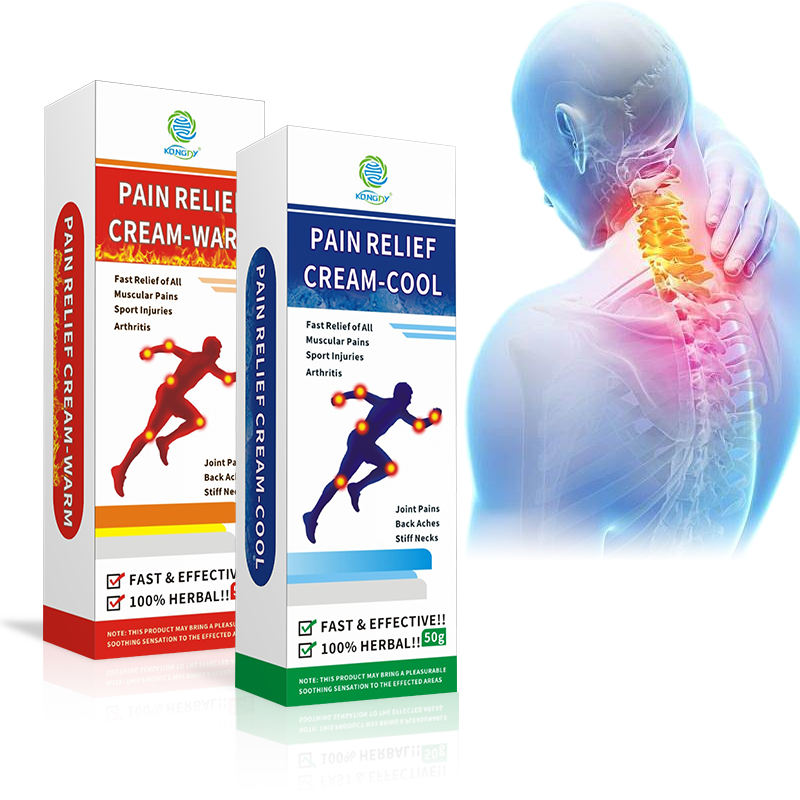
A high-quality pain cream doesn’t rely on just one of these. Effective formulations layer multiple mechanisms — cooling, warming, anti-inflammatory, and numbing — to address pain from different angles simultaneously.
Why Texture and Absorption Rate Matter
Many buyers overlook the delivery system. The base formula — whether a cream, gel, balm, or spray — determines how fast active ingredients penetrate the skin and whether the product leaves a greasy residue.
For active users and athletes, a fast-absorbing, non-greasy formula is essential. For elderly users with chronic joint pain, a thicker cream with sustained-release properties often works better.
What to Look for in a Pain Cream Manufacturer
If you’re a brand owner, healthcare distributor, or retailer looking to source or private-label a pain cream product, evaluating the manufacturer is as important as evaluating the formula. Key questions to ask:
- Can they customize the active ingredient concentration?
- Do they offer OEM/ODM services with flexible MOQ (minimum order quantity)?
- What certifications do they hold — GMP, ISO, FDA registration?
- Can they handle custom branding, packaging design, and label printing?
- What is their typical lead time from formulation approval to delivery?
Kangzhimei: A Manufacturing Partner Built for Customization
Kangzhimei is a professional pain cream manufacturer specializing in OEM and ODM production for brands, wholesalers, and distributors worldwide. With a GMP-compliant production facility and a dedicated R&D team, Kangzhimei offers:
- Custom formulation development tailored to your target market and regulatory requirements
- Flexible MOQs to support both startup brands and large-scale wholesale buyers
- Full-service private labeling, including custom packaging, logo printing, and box design
- A range of ready-to-customize base formulas including menthol/camphor blends, capsaicin-based creams, CBD-infused options, and herbal formulas for Asian and European markets
Whether you’re launching a new sports recovery brand, expanding a pharmacy’s house label, or stocking up for wholesale distribution, Kangzhimei provides the manufacturing infrastructure and regulatory documentation to support your business.
Who Should Consider a Custom Pain Cream Partnership?
- Health & wellness brands looking to expand their topical product line
- Physical therapy clinics and chiropractors wanting branded products for patient retail
- Sports nutrition companies seeking a complementary topical recovery product
- Wholesale distributors supplying pharmacies, gyms, and health stores
- Amazon and e-commerce sellers building private label brands in the pain relief niche
Getting Started
Customizing a pain cream formula with a manufacturer like Kangzhimei typically involves four steps: (1) sharing your target use case and market, (2) selecting or developing a base formula, (3) approving a sample batch, and (4) finalizing packaging and placing your production order.
The entire process — from first inquiry to finished product — can be completed in as little as 30–45 days for standard formulas.
For brands serious about capturing market share in the growing topical pain relief segment, partnering with a reliable OEM manufacturer is the most efficient path to a differentiated, professional product.