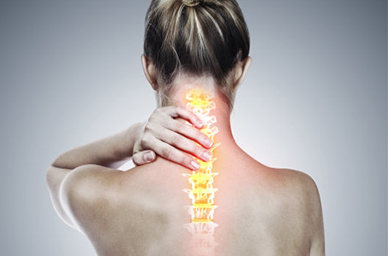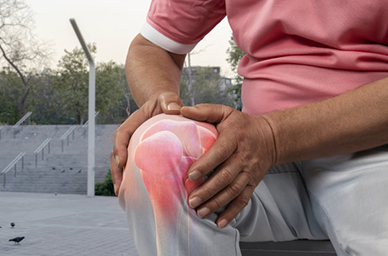
You bang your shin on a coffee table. Without thinking, you reach down and rub it.
Your child falls off a bike. You kiss the boo-boo and rub their arm.
Your lower back aches after a long day. You press your palm into the sore spot and massage in circles.
Why does rubbing feel so good? Why does touch – even without any active ingredient – reduce pain?
The answer is fascinating. And it’s why a pain cream is more than just the sum of its ingredients.
As a pain cream OEM manufacturer, Kangzhimei doesn’t just formulate for pharmacology. We formulate for psychology – because the act of applying a pain cream triggers powerful neurological mechanisms that reduce pain even before menthol or capsaicin reach the nerve endings.
In this guide, we’ll explore the science of touch, the placebo effect, and how smart brands formulate pain cream for both the body and the mind.
Part 1: The Neuroscience of Touch – Why Rubbing Reduces Pain
The gate control theory of pain (Melzack & Wall, 1965):
Your spinal cord has a “gate” that controls whether pain signals reach your brain. Non-painful input (touch, pressure, rubbing, massage) closes the gate – reducing the pain signals that get through.
How rubbing a pain cream activates this mechanism:
| Action | Neurological Effect | Pain Reduction |
|---|---|---|
| Pressure from fingers | Activates mechanoreceptors (touch sensors) | Closes the pain gate within milliseconds |
| Circular massage | Repeated stimulation of A-beta nerve fibers | Outcompetes pain signals from C-fibers |
| Temperature change | Menthol = cooling, camphor = warming | Additional sensory input, further gate closure |
| Scent (if present) | Olfactory system connects to limbic system | Emotional calming reduces pain perception |
The bottom line: Even a placebo pain cream (no active ingredients) would provide some relief purely through the act of rubbing. A real pain cream with active ingredients provides additive relief – touch + pharmacology.
Long-tail keyword: why does rubbing a sore muscle help pain
Part 2: The Placebo Effect – Real Relief, Fake Pill
The placebo effect is not “all in your head.” It is a real biological response triggered by expectation, conditioning, and context.
What happens in the brain during placebo pain relief:
| Brain Region | Function | Placebo Effect |
|---|---|---|
| Prefrontal cortex | Expectation, decision-making | Activates when you expect relief |
| Periaqueductal gray (PAG) | Natural pain inhibition | Releases endogenous opioids (your body’s natural painkillers) |
| Nucleus accumbens | Reward, motivation | Dopamine release – feels good to apply cream |
| Amygdala | Fear, anxiety | Reduced activity = less pain amplification |
Clinical evidence: Placebo pain cream studies show that rubbing an inert cream reduces pain by 20–30% compared to no treatment. That’s real relief – from expectation and touch alone.
Why this matters for pain cream brands:
- Packaging, branding, and “clinical” appearance enhance placebo response
- The ritual of application (dispensing, rubbing, waiting) creates expectation
- Trust in the brand activates prefrontal cortex expectation circuits
Kangzhimei’s approach: We help brands design packaging and application instructions that enhance the placebo response – without making false claims. Good design is good medicine.
Long-tail keyword: placebo effect in topical pain relief
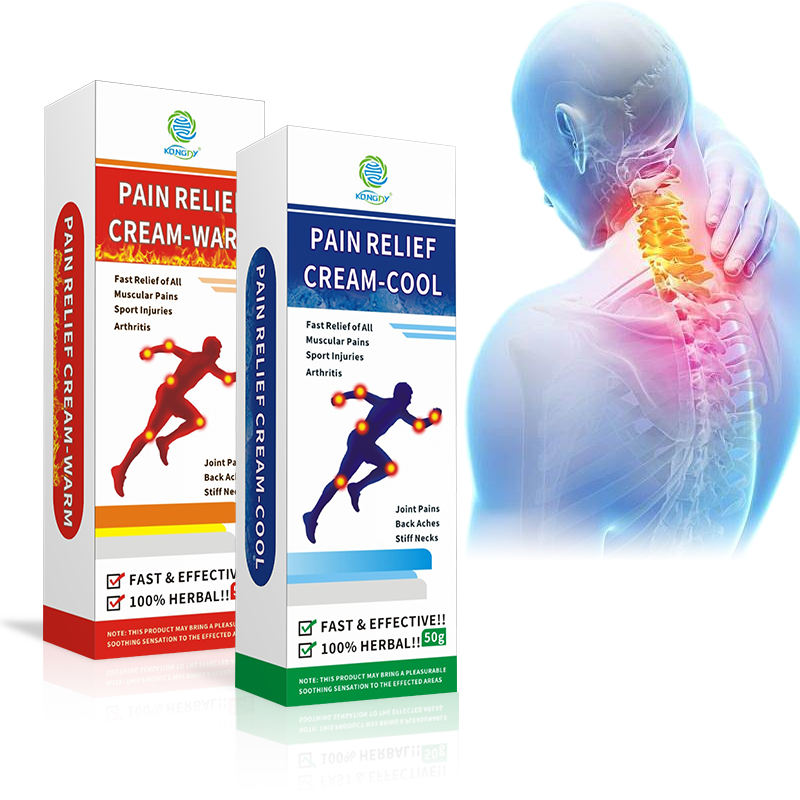
Part 3: Why Pain Cream Formulation Must Address Both Body AND Mind
A pain cream that ignores psychology is only half as effective as it could be.
The whole-person formulation framework (Kangzhimei method):
| Component | Body (Pharmacology) | Mind (Psychology) |
|---|---|---|
| Active ingredients | Menthol, capsaicin, lidocaine, MSM, arnica | N/A – but expectation of “strong” ingredients matters |
| Base texture | Absorbs well, non-irritating | Cream should feel “therapeutic” (not too thin, not too thick) |
| Scent | Optional (some essential oils have mild anti-inflammatory effects) | Lavender = calming; eucalyptus = “clean/medical”; peppermint = “cooling” |
| Color | N/A | Green or blue = perceived as “cooling”; red or orange = “warming”; white = “clinical/clean” |
| Packaging | Protects product, prevents degradation | Pump jar = “clinical/professional”; tube = “familiar”; stick = “convenient” |
| Application ritual | Proper dosing, full coverage | Massage = gate control; waiting = expectation builds |
Example: A blue gel with peppermint scent in an airless pump jar. The blue color suggests “cooling.” The peppermint scent reinforces “cooling.” The pump jar feels “medical.” The act of pumping and massaging closes the pain gate. By the time the menthol activates, the brain is already primed for relief.
Long-tail keyword: psychological benefits of using pain cream
Part 4: The 5 Sensory Cues That Enhance Pain Cream Effectiveness
Cue 1: Scent (Olfactory)
| Scent | Psychological Effect | Best For |
|---|---|---|
| Peppermint / menthol | “Cooling,” “fresh,” “clean” | Sports recovery, acute pain |
| Eucalyptus | “Medical,” “decongesting,” “professional” | Arthritis, back pain |
| Lavender | “Calming,” “sleepy,” “gentle” | Nighttime use, chronic pain |
| Camphor / wintergreen | “Deep heating,” “old-school medicine” | Muscle spasms, old injuries |
| Unscented | “Hypoallergenic,” “clinical,” “no-nonsense” | Sensitive skin, medical settings |
Kangzhimei’s scent library: 20+ natural essential oils and fragrance oils. We help you match scent to brand positioning.
Cue 2: Color (Visual)
| Color | Perceived Effect | Best For |
|---|---|---|
| Blue | Cooling, calming, medical | Sports gels, post-workout |
| Green | Natural, herbal, soothing | Natural pain creams, arthritis |
| White | Clean, clinical, professional | Medical-grade, senior-focused |
| Red / orange | Warming, heating, strong | Capsaicin creams, chronic pain |
| Clear / translucent | Modern, fast-absorbing, non-staining | Roll-ons, gels |
Kangzhimei’s color options: Custom colors available for ODM clients. We can match your brand’s Pantone.
Cue 3: Texture (Tactile)
| Texture | Psychological Effect | Best For |
|---|---|---|
| Light gel | Fast, clean, non-greasy – “sports” | Athletes, acute injuries |
| Rich cream | Nourishing, long-lasting, “therapeutic” | Arthritis, dry skin, chronic pain |
| Thick balm | Potent, concentrated, “old-school medicine” | Deep tissue, trigger points |
| Lotion | Gentle, everyday, “mild” | General aches, sensitive skin |
Cue 4: Packaging (Visual + Functional)
| Packaging Type | Psychological Message | Best For |
|---|---|---|
| Airless pump jar | “Clinical,” “professional,” “hygienic” | Medical brands, premium positioning |
| Squeeze tube | “Familiar,” “everyday,” “practical” | Mass market, drugstores |
| Roll-on | “Convenient,” “on-the-go,” “no mess” | Travel, sports, office |
| Stick | “Solid,” “concentrated,” “easy” | Targeted application, discrete use |
| Tin / jar with lid | “Traditional,” “old-fashioned,” “artisanal” | Natural/organic brands |
Cue 5: Application Ritual (Behavioral)
The act of applying a pain cream creates a mini-meditation – a pause in the day where you attend to your body.
Kangzhimei’s recommended “mindful application” instructions (for labels or inserts):
“Take three slow breaths. Dispense a small amount of cream into your palm. Close your eyes. Apply to the painful area with gentle, circular pressure. As you massage, imagine warmth or coolness spreading through the muscle. Continue for 30 seconds. Breathe normally. Relief is on its way.”
Why this works: Expectation + attention + touch + breathing = maximal gate control and placebo response.
Long-tail keyword: mindful pain relief cream application technique
Part 5: Clinical Evidence – Touch Alone Reduces Pain
| Study | Finding |
|---|---|
| Field et al. (2016) | 15 minutes of moderate pressure massage reduced pain by 40–50% in chronic back pain patients |
| Inoue et al. (2019) | Self-massage with a handheld device reduced muscle soreness by 30% compared to no treatment |
| Placebo-controlled cream studies | Inert cream + rubbing = 20–30% pain reduction; active cream + rubbing = 50–70% reduction |
The additive effect:
| Condition | Pain Reduction |
|---|---|
| No treatment | 0% |
| Rest only | 10–15% |
| Rubbing only (no cream) | 20–25% |
| Placebo cream + rubbing | 25–35% |
| Active pain cream + rubbing | 50–70% |
The takeaway: The rubbing is not optional. A pain cream that is simply dabbed on (without massage) loses half its potential effect.
Long-tail keyword: clinical studies on massage for muscle pain
Part 6: How Kangzhimei Formulates for Both Body and Mind
Our “whole-person” formulation checklist:
| Factor | Body Consideration | Mind Consideration |
|---|---|---|
| Menthol percentage | High (3–4%) = faster gate control | High = “this is strong medicine” |
| Capsaicin percentage | Low start (0.025%) to build tolerance | Warming sensation = “it’s working” |
| Base thickness | Medium for spreadability | Thick enough to feel “substantial,” thin enough to absorb |
| Scent | Optional therapeutic effects | Strategically chosen for expected outcome (cooling, warming, calming) |
| Color | N/A | Blue for cooling, red for warming, green for natural |
| Packaging | Airless = protects ingredients | Pump = “clinical,” tube = “familiar” |
| Instructions | Proper dosing | Include massage and breathing guidance |
Kangzhimei’s proprietary “sensory-first” formulation process:
- Define the desired emotional outcome (calm? energized? relieved? comforted?)
- Select scent and color to match the emotion
- Choose texture and packaging to reinforce the message
- Add active ingredients at clinically effective percentages
- Test – both for pharmacology AND sensory experience
Long-tail keyword: sensory design in topical pain relief
Part 7: For Brands – How to Market the Mind-Body Connection
Don’t say: “Our cream is 50% stronger than competitors.” (Unverifiable, encourages skepticism)
Do say: “Formulated for both your body and your senses. Cooling blue gel. Refreshing peppermint scent. Smooth, non-greasy texture. Apply with gentle massage – and feel the difference.”
Marketing angles for the psychology-aware brand:
| Angle | Message Example | Why It Works |
|---|---|---|
| Ritual | “Turn pain relief into a 60-second self-care ritual.” | Appeals to wellness seekers |
| Sensory | “Cooling blue. Refreshing mint. Silky smooth.” | Activates sensory imagination |
| Mindful | “Breathe. Apply. Massage. Release.” | Appeals to meditation/mindfulness crowd |
| Touch | “Your hands know how to heal. Our cream helps.” | Primal, emotional |
Kangzhimei’s support for your brand:
- Custom scent development (20+ options, or create your own)
- Custom color matching (Pantone)
- Texture tuning (from thin gel to thick balm)
- Packaging design guidance (we refer you to trusted printers)
- Label copy suggestions (including mindful application instructions)
Part 8: Frequently Asked Questions (Psychology Edition)
Q: Is the placebo effect “fake” relief?
A: No. Placebo-induced pain relief involves real biological changes – endogenous opioid release, reduced brain activity in pain-processing regions, and reduced inflammation markers. The relief is real; the mechanism is expectation, not pharmacology.
Q: Can I claim on my label that “touch reduces pain”?
A: Structure/function claim: “Massage helps relax tight muscles” is generally acceptable. “Rubbing this cream closes the pain gate” is too technical and may be questioned by regulators. Kangzhimei provides compliant claim language – consult your legal team.
Q: Does scent actually do anything for pain, or is it just marketing?
A: Both. Some essential oils (lavender, peppermint) have mild anti-inflammatory or analgesic effects. But the primary benefit is psychological – scent primes the brain for the expected outcome (cooling, warming, calming).
Q: Can too much “psychological” formulation backfire?
A: Yes. If the sensory experience doesn’t match the actual effect (e.g., a blue “cooling” gel that doesn’t cool), customers feel deceived. Kangzhimei ensures sensory cues match pharmacological reality.
Q: Does Kangzhimei test for sensory experience, not just ingredients?
A: Yes. We conduct small sensory panels (texture, scent, absorption, skin feel) for all ODM custom formulas. We want your customers to love the experience – not just tolerate it.
Conclusion: The Cream You Rub, The Pain You Lose
A pain cream is not just a tube of active ingredients. It is a tool for touch. A vehicle for massage. A trigger for expectation. A ritual of self-care.
When you formulate for both body AND mind – pharmacology AND psychology – you create a pain cream that works better than the sum of its parts.
Kangzhimei understands this. We are a pain cream OEM manufacturer that formulates for the whole person.
📧 Contact Kangzhimei today for:
- Free samples of our sensory-optimized pain cream formulas
- OEM/ODM catalog and wholesale pricing
- Custom scent, color, and texture development
- Mindful packaging and labeling guidance
Your body feels the ingredients. Your mind feels the relief. We formulate for both.