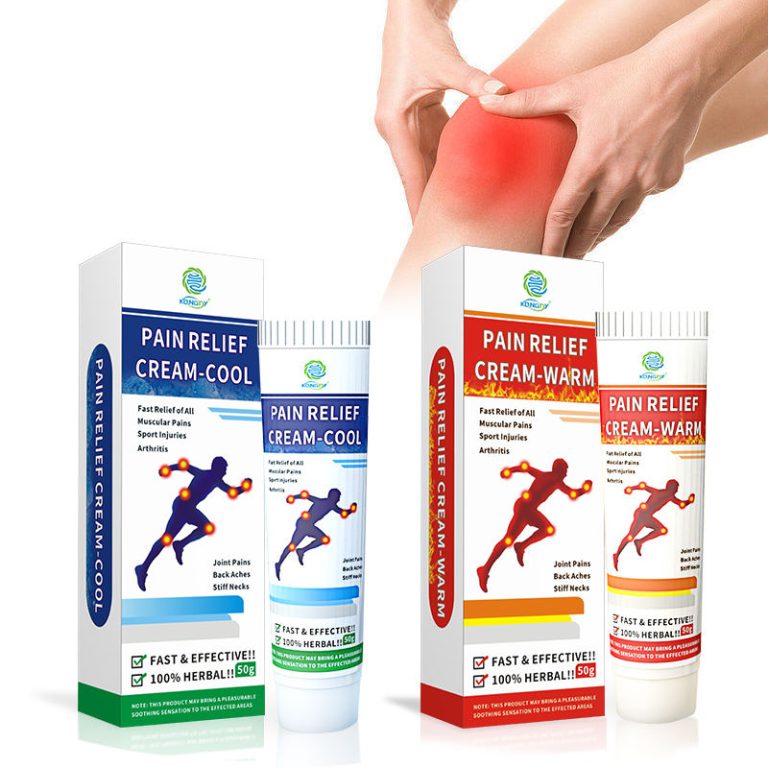
Walk into any drugstore. Scan Amazon for “pain cream.” You’ll see dozens of options. Cooling gels. Warming balms. Numbing lotions. Natural formulas with arnica. Clinical-looking tubes with lidocaine.
Which one actually works for YOUR pain?
The problem is marketing hype. Every brand claims to be “maximum strength” or “doctor recommended.” But unless you understand the ingredients – and the evidence behind them – you’re guessing.
As a pain cream OEM manufacturer with over a decade of formulation experience, Kangzhimei has produced hundreds of pain relief cream formulas. We don’t have a “best” product – because the best pain cream depends on your specific pain type, skin sensitivity, and desired onset speed.
In this guide, we’ll decode 10 common pain cream ingredients, rank them by evidence strength, and provide a decision tree to help you choose. No marketing hype. Just science.
Part 1: The 10 Most Common Pain Cream Ingredients – Decoded
Ingredient 1: Menthol
| Property | Details |
|---|---|
| Source | Peppermint oil, cornmint oil (synthetic also available) |
| How it works | Activates TRPM8 cold receptors – “gate control” theory – distracts brain from pain |
| Sensation | Cooling (can feel like ice or mild tingle depending on percentage) |
| Onset | 1–5 minutes |
| Duration | 1–3 hours |
| Evidence strength | ✅ Very strong – FDA-approved topical analgesic |
| Best for | Acute muscle pain, back pain, tension headaches, sports injuries |
| Typical percentage | 1% (mild) to 6% (maximum strength OTC) |
| Skin safety | High – but high percentages (4%+) can cause burning sensation in sensitive skin |
Long-tail keyword: how does menthol pain cream work scientifically
Kangzhimei’s note: Menthol is our most popular ingredient for cooling pain cream formulas. It’s safe, fast, and predictable.
Ingredient 2: Capsaicin
| Property | Details |
|---|---|
| Source | Chili peppers (cayenne, habanero) |
| How it works | Depletes Substance P – a neurotransmitter that sends pain signals to the brain |
| Sensation | Warming → burning (initially), then pain reduction (after 2–4 weeks) |
| Onset | Immediate sensation; full pain relief takes 2–4 weeks of consistent use |
| Duration | 4–6 hours (but effect builds over time) |
| Evidence strength | ✅ Very strong – FDA-approved for arthritis and neuropathy |
| Best for | Chronic pain: osteoarthritis, diabetic neuropathy, post-herpetic neuralgia (shingles) |
| Typical percentage | 0.025% (low) to 0.25% (high – prescription in some countries) |
| Skin safety | Moderate – causes burning sensation, especially initially; wash hands thoroughly |
Long-tail keyword: capsaicin cream for arthritis how long to work
Kangzhimei’s note: Capsaicin is our go-to for warming pain cream formulas targeting chronic conditions. We always include clear warnings and start with lower percentages for OTC products.
Ingredient 3: Lidocaine
| Property | Details |
|---|---|
| Source | Synthetic (local anesthetic) |
| How it works | Blocks sodium channels in nerve membranes – prevents pain signal transmission |
| Sensation | Numbing (no heat or cold) |
| Onset | 5–15 minutes |
| Duration | 3–4 hours |
| Evidence strength | ✅ Very strong – FDA-approved topical anesthetic |
| Best for | Nerve pain, post-shingles pain, minor burns, insect bites, hemorrhoids |
| Typical percentage | 2% (mild) to 4–5% (maximum strength OTC) |
| Skin safety | High – but do NOT use on large areas or under occlusion |
Long-tail keyword: lidocaine pain cream for nerve pain dosage
Kangzhimei’s note: Lidocaine is our specialist ingredient for nerve pain cream formulas. We pair it with aloe and vitamin E to soothe numbed skin.
Ingredient 4: Methyl Salicylate (Wintergreen Oil)
| Property | Details |
|---|---|
| Source | Wintergreen plant (or synthetic) |
| How it works | Counterirritant – causes mild irritation that distracts from deeper pain; also has anti-inflammatory effects |
| Sensation | Strong warming/cooling (similar to menthol but more “sharp”) |
| Onset | 5–10 minutes |
| Duration | 2–4 hours |
| Evidence strength | ✅ Moderate – FDA-approved counterirritant |
| Best for | Muscle aches, sprains, strains, arthritis |
| Typical percentage | 10–30% (common in sports creams like Bengay, Icy Hot) |
| Skin safety | Moderate – can cause burns at high percentages; interacts with blood thinners (warfarin) |
Long-tail keyword: methyl salicylate pain cream blood thinner interaction
Kangzhimei’s note: We use methyl salicylate carefully – it’s effective but has more drug interactions than menthol. We always disclose this to B2B clients.
Ingredient 5: Camphor
| Property | Details |
|---|---|
| Source | Camphor tree (or synthetic) |
| How it works | Counterirritant + mild local anesthetic |
| Sensation | Warming → cooling (dual sensation) |
| Onset | 5–10 minutes |
| Duration | 2–3 hours |
| Evidence strength | ✅ Moderate – FDA-approved topical analgesic |
| Best for | Muscle aches, chest congestion (in Vicks), arthritis, minor pain |
| Typical percentage | 1–3% (OTC); higher percentages are prescription-only (or banned) |
| Skin safety | Good at low percentages; toxic if ingested (do NOT use near mouth) |
Long-tail keyword: camphor vs menthol pain relief difference
Kangzhimei’s note: Camphor is often paired with menthol for a balanced cooling-warming sensation. We use it in dual-action pain cream formulas.
Ingredient 6: MSM (Methylsulfonylmethane)
| Property | Details |
|---|---|
| Source | Naturally occurring sulfur compound (plants, animals, humans) |
| How it works | Provides bioavailable sulfur for collagen production; reduces oxidative stress and inflammation |
| Sensation | None (no heat or cold) |
| Onset | 15–30 minutes (topical); full effect takes days to weeks |
| Duration | Several hours (gradual) |
| Evidence strength | ✅ Moderate (stronger for oral; emerging for topical) |
| Best for | Joint pain, osteoarthritis, post-exercise recovery |
| Typical percentage | 3–15% |
| Skin safety | Excellent – naturally occurring, minimal irritation |
Long-tail keyword: msm pain cream for joint inflammation
Kangzhimei’s note: MSM is our “workhorse” ingredient for joint pain cream formulas. It pairs well with glucosamine and boswellia.
Ingredient 7: Arnica Montana
| Property | Details |
|---|---|
| Source | Arnica flower (herbal extract) |
| How it works | Contains helenalin – reduces inflammation and bruising |
| Sensation | Slight cooling (from herbal carrier, not active cooling) |
| Onset | 15–30 minutes |
| Duration | 2–4 hours |
| Evidence strength | ✅ Moderate (positive studies for bruising, post-surgery swelling, mild arthritis) |
| Best for | Bruises, sprains, post-workout soreness, mild arthritis |
| Typical percentage | 2–10% extract (standardized to 0.2–0.5% helenalin) |
| Skin safety | Good – but avoid on broken skin (can cause irritation) |
Long-tail keyword: arnica pain cream for bruising and swelling
Kangzhimei’s note: Arnica is our top choice for natural pain cream formulas. It’s well-tolerated and has a strong “clean ingredient” appeal.
Ingredient 8: Boswellia Serrata (Frankincense)
| Property | Details |
|---|---|
| Source | Boswellia tree resin (herbal extract) |
| How it works | Boswellic acids inhibit 5-lipoxygenase (an inflammatory enzyme) |
| Sensation | None (no heat or cold) |
| Onset | 30–60 minutes |
| Duration | Several hours |
| Evidence strength | ✅ Moderate (stronger for oral; emerging for topical) |
| Best for | Inflammatory joint conditions (rheumatoid arthritis, osteoarthritis) |
| Typical percentage | 1–5% extract (standardized to 65% boswellic acids) |
| Skin safety | Excellent |
Long-tail keyword: boswellia pain cream for rheumatoid arthritis
Kangzhimei’s note: Boswellia is a premium ingredient for inflammation-focused pain cream formulas. It’s more expensive than MSM but has a distinct mechanism.
Ingredient 9: Glucosamine
| Property | Details |
|---|---|
| Source | Shellfish shells (or synthetic/vegetarian) |
| How it works | Provides building blocks for cartilage repair (controversial evidence) |
| Sensation | None |
| Onset | Weeks to months (if at all) |
| Duration | N/A |
| Evidence strength | ⚠️ Weak for topical (stronger for oral – but even oral evidence is mixed) |
| Best for | Joint health (marketing appeal more than proven efficacy) |
| Typical percentage | 2–10% |
| Skin safety | Good – but shellfish allergy warning required |
Long-tail keyword: does topical glucosamine cream work for joints
Kangzhimei’s note: We include glucosamine in some joint pain cream formulas because customers expect it. But we’re honest: MSM and boswellia have stronger evidence.
Ingredient 10: CBD (Cannabidiol)
| Property | Details |
|---|---|
| Source | Hemp or cannabis |
| How it works | Modulates endocannabinoid system – reduces inflammation and pain perception |
| Sensation | None (unless paired with menthol/camphor) |
| Onset | 15–30 minutes |
| Duration | 2–4 hours |
| Evidence strength | ⚠️ Emerging (positive small studies; larger trials needed) |
| Best for | Chronic pain, arthritis, neuropathic pain |
| Typical percentage | 100–500mg per container (not percentage-based) |
| Skin safety | Good – but regulatory complexity (not legal in all countries) |
Long-tail keyword: cbd pain cream vs menthol which is better
Kangzhimei’s note: We offer CBD pain cream ODM for clients in markets where it’s legal. We do NOT make medical claims; we follow local regulations strictly.
Part 2: Ingredient Comparison Table – At a Glance
| Ingredient | Onset | Duration | Best For | Evidence | Skin Feel |
|---|---|---|---|---|---|
| Menthol | 1–5 min | 1–3 hours | Acute muscle pain | ✅ Strong | Cooling |
| Capsaicin | Immediate sensation; 2–4 weeks for relief | 4–6 hours | Chronic arthritis, neuropathy | ✅ Strong | Warming → burning |
| Lidocaine | 5–15 min | 3–4 hours | Nerve pain, numbing | ✅ Strong | Numbing |
| Methyl salicylate | 5–10 min | 2–4 hours | Muscle aches | ✅ Moderate | Warm/cool |
| Camphor | 5–10 min | 2–3 hours | General muscle pain | ✅ Moderate | Warm/cool dual |
| MSM | 15–30 min | Hours | Joint pain, inflammation | ✅ Moderate | None |
| Arnica | 15–30 min | 2–4 hours | Bruises, sprains | ✅ Moderate | Slight cooling |
| Boswellia | 30–60 min | Hours | Inflammatory joint pain | ✅ Moderate | None |
| Glucosamine | Weeks (if at all) | N/A | Joint health (marketing) | ⚠️ Weak | None |
| CBD | 15–30 min | 2–4 hours | Chronic pain | ⚠️ Emerging | None |
Part 3: The Pain Cream Decision Tree (For Consumers)
Use this flowchart to choose the right pain cream for YOUR pain.
Step 1 – Identify your pain type:
| Pain Type | Description | Go to Step |
|---|---|---|
| Acute muscle pain | Sharp, recent (last 48 hours), from injury or overuse | Option A |
| Chronic joint pain | Dull, achy, lasting weeks/months, worse with movement | Option B |
| Nerve pain | Burning, shooting, electric shocks, tingling, numbness | Option C |
| Arthritis (osteo) | Deep joint pain, morning stiffness, improves with movement | Option D |
| Bruises / swelling | Discoloration, tender to touch, post-injury | Option E |
Option A – Acute muscle pain:
Choose: Cooling pain cream with menthol (3–4%) + optional arnica
Example: Kangzhimei sports cooling gel
Option B – Chronic joint pain:
Choose: Warming pain cream with capsaicin (0.025–0.075%) + MSM (5–10%)
Example: Kangzhimei arthritis warming cream
Option C – Nerve pain:
Choose: Lidocaine cream (4%) (numbing) or high-concentration capsaicin (0.075–0.1%) (gradual)
Example: Kangzhimei neuropathy lidocaine lotion
Option D – Osteoarthritis:
Choose: MSM + boswellia + optional low-dose capsaicin
Example: Kangzhimei joint support cream
Option E – Bruises / swelling:
Choose: Arnica cream (5–10% extract)
Example: Kangzhimei bruise relief arnica gel
Long-tail keyword: how to choose the right pain cream for your pain type
Part 4: Decision Tree for Brands (OEM/ODM Selection)
If you’re a brand owner, use this framework to decide which pain cream formulas to develop.
| Your Target Customer | Recommended Formula Type | Key Ingredients | Kangzhimei Solution |
|---|---|---|---|
| Athletes, gym-goers | Cooling gel | Menthol 4%, Arnica 3% | OEM sports cooling gel (500 units MOQ) |
| Seniors, arthritis patients | Warming cream | Capsaicin 0.05%, MSM 10%, Boswellia 2% | OEM arthritis warming cream |
| Neuropathy patients | Lidocaine lotion | Lidocaine 4%, Aloe 10% | OEM nerve pain cream |
| Natural/organic consumers | Herbal cream | Arnica, MSM, Boswellia, no synthetic | ODM natural pain cream |
| Mass market (drugstores) | Dual-action (cool + warm) | Menthol 2% + Camphor 2% + MSM 5% | OEM dual-action pain cream |
Long-tail keyword: private label pain cream formula selection guide
Part 5: Red Flags – What to Avoid When Reading Labels
| Red Flag | What It Means | What to Do |
|---|---|---|
| “Proprietary blend” with no percentages | They’re hiding low potency | Look for labeled percentages (e.g., “Menthol 3%”) |
| Homeopathic dilutions (6X, 30C, etc.) | No active ingredient molecules remain (water only) | Avoid – unless you believe in water memory |
| “Dermatologist tested” (no data) | Means nothing without published results | Look for “third-party tested” with available COA |
| “Natural” on a product with synthetic ingredients | Marketing term, not regulated | Read the full ingredient list |
| No ingredient list at all | Illegal in most countries – huge red flag | Do not buy |
Long-tail keyword: pain cream label red flags to avoid
Part 6: Frequently Asked Questions (Science Edition)
Q: Can I mix different pain creams (e.g., menthol + capsaicin)?
A: Yes, but be careful. Apply one, wait 15 minutes, then apply the other. Do NOT mix in your hand before applying (percentages get confusing). And never mix lidocaine with capsaicin on the same area – the burning sensation may overwhelm the numbing.
Q: Does higher percentage mean better relief?
A: Not always. For menthol, 3–4% is optimal; higher (5–6%) causes burning without additional relief. For capsaicin, higher percentages (0.1%+) cause severe burning – and require prescription in some countries. More is not always better.
Q: How do I know if a pain cream is working or if it’s placebo?
A: Both are valid. The placebo effect is real neurobiology – expectation triggers endogenous opioid release. But active ingredients provide additional relief. If a pain cream works (whether through pharmacology, placebo, or both), it works.
Q: Can I build tolerance to pain cream ingredients?
A: For menthol and lidocaine: no significant tolerance. For capsaicin: tolerance develops to the burning sensation (which is good), but pain relief continues or improves with consistent use.
Q: Does Kangzhimei test all ingredients for purity and potency?
A: Yes. Every batch of raw material is tested (heavy metals, pesticides, microbial, active ingredient concentration). We provide COAs to all B2B clients.
Conclusion: Knowledge is the Best Pain Reliever
You don’t need to be a chemist to choose the right pain cream. But understanding the ingredients – and the evidence behind them – turns a guessing game into a confident decision.
Kangzhimei is a pain cream OEM manufacturer that believes in transparency. Whether you’re a consumer choosing a product or a brand developing one, we’re here to help.
📧 Contact Kangzhimei today for:
- Free samples of our ingredient-specific formulas (menthol, capsaicin, lidocaine, MSM, arnica, boswellia)
- OEM/ODM catalog and wholesale pricing
- Custom formula development (tell us your target ingredient profile)
Read the label. Understand the science. Choose what works.